A battery that fails without warning usually wasn’t actually without warning — it’s just that nobody was looking for the signs. Regular Industrial Battery Inspection catches exactly the kind of gradual decline that leads to sudden failures, turning an unpredictable breakdown into a scheduled, manageable repair. This blog explains what a proper inspection actually checks, how often it should happen, and why skipping it costs more than the inspection itself ever would.
Key Takeaways
- Most battery failures are preceded by detectable warning signs — regular inspection is how you catch them before failure
- Industrial Battery Inspection Toronto should check specific, measurable factors, not just a quick visual glance
- A consistent inspection schedule costs far less over time than reacting to unplanned failures
- Forklift Battery Inspection Toronto businesses build into their routine typically catches issues weeks before they’d otherwise surface
- Industrial Battery Maintenance and inspection work together — one without the other leaves real gaps in battery health
Table of Contents
- What Does a Proper Battery Inspection Actually Check?
- How Often Should Inspections Actually Happen?
- What Does Skipping Inspections Actually Cost?
- Who Should Be Responsible for Running Inspections?
- How Do Inspections and Maintenance Work Together?
What Does a Proper Battery Inspection Actually Check?
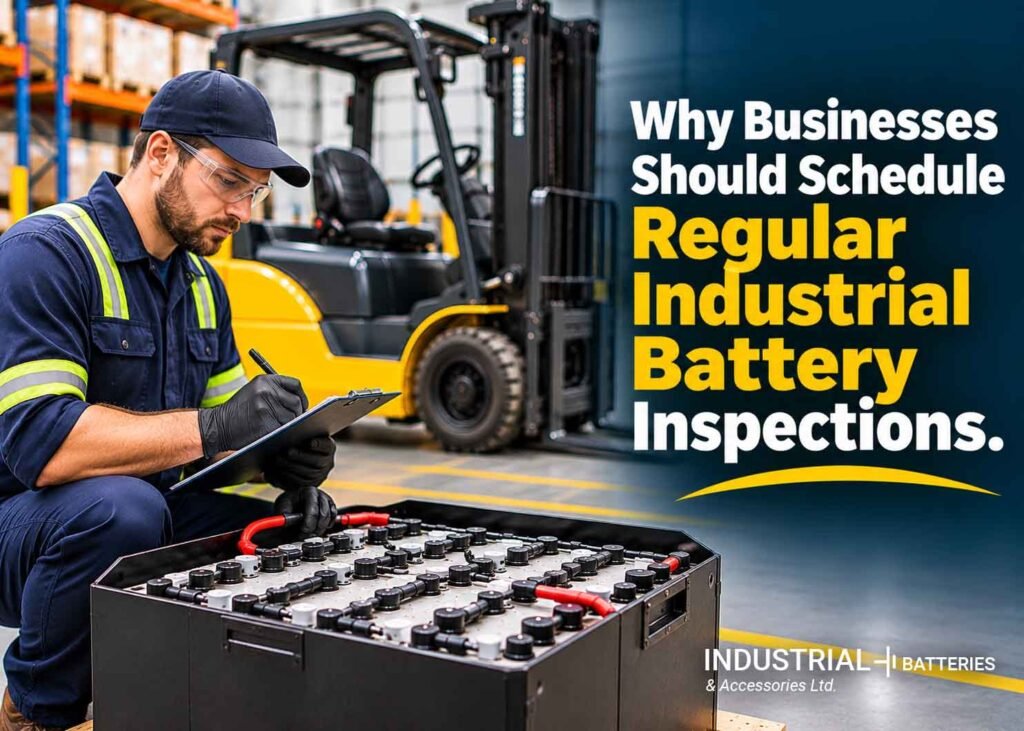
A thorough inspection goes beyond a visual glance — it includes voltage testing, specific gravity checks on individual cells, terminal and connector condition, and water level verification. Each of these tells a different part of the battery’s actual health story, and skipping any one of them leaves a real blind spot.
- Voltage testing under load reveals whether the battery is holding its rated capacity
- Specific gravity checks on individual cells can catch a weak cell before it drags the whole battery down
- Terminal and connector inspection catches corrosion before it spreads or affects current flow
- Water level verification confirms watering has been done correctly and on schedule
- Case inspection checks for cracks, swelling, or other physical damage that’s easy to miss in a rush
How Often Should Inspections Actually Happen?
A weekly visual check paired with a more thorough monthly inspection covers most of what matters for a battery in regular use. Higher-use or older batteries benefit from more frequent attention, since they’re more likely to be approaching the point where small issues start to develop.
| Inspection type | Frequency | What it covers |
| Visual check | Weekly | Water levels, visible corrosion, case condition |
| Thorough inspection | Monthly | Voltage, specific gravity, connector condition |
| Load test | Quarterly | Actual capacity under real working conditions |
What Does Skipping Inspections Actually Cost?
Skipping inspections doesn’t eliminate the problems — it just delays when you discover them, usually at the worst possible moment, mid-shift, with no warning at all. Forklift Battery Inspection Toronto operations that skip this step regularly report higher emergency repair costs and more unplanned downtime than those running a consistent schedule.
The inspection itself costs very little time and effort compared to what an unplanned failure costs in lost productivity, emergency repair fees, and operator downtime.
Who Should Be Responsible for Running Inspections?
Assigning inspection responsibility to a specific, trained person — rather than leaving it as a general team task — is what actually gets inspections done consistently. “Someone should check the batteries” rarely translates into regular action; a named person with a checklist does.
- Assign inspections to a specific role, not a general team responsibility
- Provide a written checklist covering all the key inspection points
- Log results somewhere visible, so patterns across the fleet become obvious over time
- Review flagged issues promptly rather than letting them sit on a list
How Do Inspections and Maintenance Work Together?
Inspection tells you what’s wrong; Industrial Battery Maintenance is what you do about it. One without the other leaves a real gap — inspecting without acting on the findings is just documentation, and maintaining without inspecting means you’re guessing at what actually needs attention.
Want a straightforward inspection schedule your team will actually follow? Industrial Batt can help set up a practical Industrial Battery Inspection routine built around your fleet’s actual usage.
Frequently Asked Questions
How long does a proper battery inspection actually take?
A monthly thorough inspection typically takes 15 to 30 minutes per battery, depending on fleet size and how the checks are organized. It’s a small time investment relative to what it prevents.
Can I do battery inspections myself, or do I need a professional?
Basic visual checks and water level verification can be done in-house with proper training. Voltage testing, specific gravity checks, and load testing benefit from professional expertise, especially early on.
What’s the biggest sign an inspection schedule isn’t working?
Repeated unplanned battery failures despite having a “schedule” in place. This usually means inspections are being skipped or rushed, not that the schedule itself is wrong.
Do newer, more advanced batteries still need regular inspection?
Yes, though less intensive maintenance-wise. Even batteries with built-in monitoring benefit from periodic physical inspection to confirm everything matches what the automated systems are reporting.
How much can a consistent inspection routine actually save a business?
It varies by fleet size, but consistently avoiding emergency repairs and unplanned downtime typically outweighs the modest time cost of running regular inspections many times over.