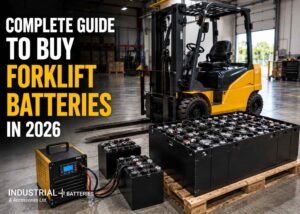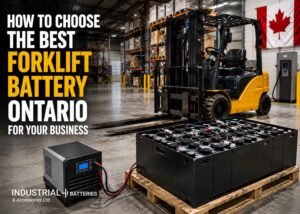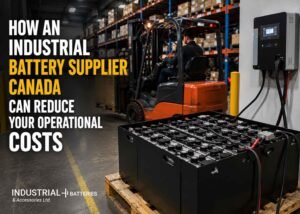
Forklifts do not move without reliable power. In many warehouses, the battery is not just one part of the truck. It is a big part of daily output, uptime, safety, and cost control. That is why a clear forklift battery guide matters.
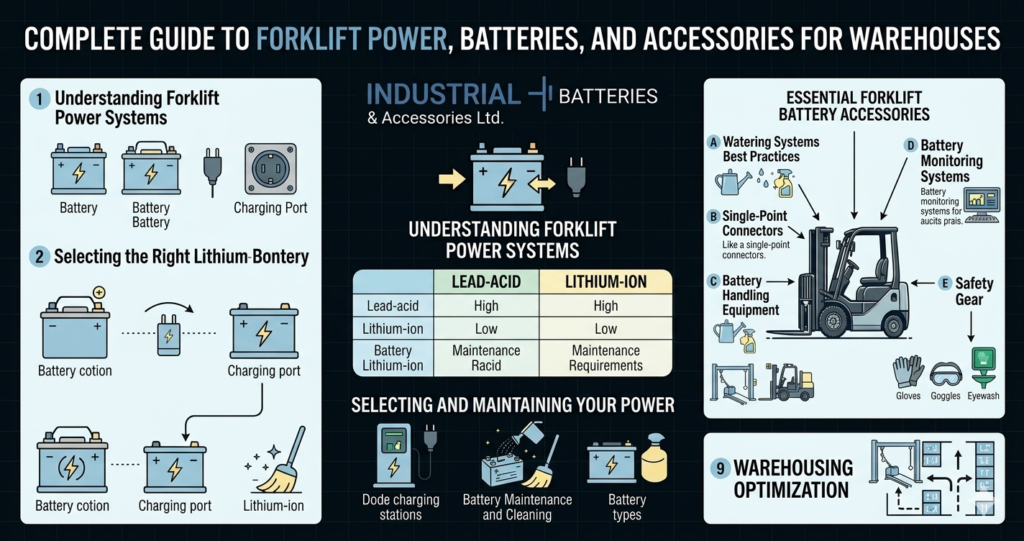
When people talk about forklift power batteries accessories, they usually mean the full power system behind an electric lift truck. This includes the battery, charger, connectors, watering tools, cables, safety gear, monitoring tools, and battery handling equipment. Each part affects how well the truck performs and how long the battery lasts.
Industrial Batteries Accessories Ltd supplies new forklift batteries, flooded lead-acid batteries, and maintenance support for operations across Ontario. The company also highlights repair, service, diagnostics, and fast delivery for warehouse users.
What Forklift Power Batteries Do In A Warehouse
Forklift power batteries store energy and deliver it to electric trucks during shifts. In a warehouse, that power supports lifting, travelling, loading, unloading, and stacking. Good warehouse forklift batteries help reduce delays and keep trucks available when teams need them most.
Battery choice matters because warehouse work is rarely light. Some sites run one shift. Others run two or three. Some forklifts move light pallets. Others handle heavy loads for long hours. A battery that is too small, weak, or poorly maintained can slow the whole operation.
Main Types Of Forklift Batteries
Most forklift power batteries used in warehouses are still flooded-lead-acid batteries. They are common because they are proven, widely available, and often cost less up front. They do, however, need regular watering, charging discipline, cleaning, and inspection. CCOHS notes that flooded lead-acid batteries need water refilling as part of normal operation, and watering should follow the manufacturer’s instructions.
Some operations also use newer battery options that need less daily attention. Even then, the basic rule stays the same. The battery must match the truck, the shift pattern, the charging plan, and the work environment.
A simple way to think about it is this:
- Light-use warehouses may do well with a standard battery setup.
- Heavy-use warehouses often need higher-capacity batteries or a battery replacement plan.
- Multi-shift sites must think carefully about charging time and backup batteries.
- Cold or hot conditions can affect battery performance and service life.
Important Forklift Battery Accessories
A battery system is more than one large battery. The accessories around it are what keep the system safe, usable, and efficient.
Chargers
The charger must fit the battery chemistry, voltage, and capacity. A poor charger match can lead to weak charging, overheating, or shorter battery life. CCOHS says charging should follow the battery maker’s instructions, and charging stations should use approved, certified equipment in Canada.
Connectors And Cables
Connectors carry current between the truck, battery, and charger. OSHA says battery cables and cable connectors should be checked regularly, and trucks should be removed from service if insulation is worn or contacts are damaged.
Watering Systems
For flooded batteries, watering tools or systems help keep the right fluid level. CCOHS advises watering after the battery is fully charged and cooled, using distilled water, and not watering before or during charging.
Monitoring Tools
Battery monitoring tools help track charge level, temperature, usage patterns, and possible issues. These tools can help managers spot weak habits before they turn into downtime.
Safety Equipment
Battery charging areas need eye protection, gloves, face protection, spill supplies, and easy access to eyewash and shower equipment where required. OSHA and CCOHS both stress training, ventilation, and emergency response in charging areas.
How To Choose The Right Warehouse Forklift Batteries
A good battery choice starts with the work, not the product label. Before buying, look at a few basic points.
Shift Length
How many hours does the truck run each day? A battery for a short shift may not perform well on a busy site with long operating hours.
Load And Travel Demand
Does the forklift handle heavy loads, ramps, or long travel paths? Higher demand uses more energy.
Charging Plan
Will the site use overnight charging, opportunity charging, or battery changing between shifts? Your charging method affects what battery setup makes sense.
Space And Battery Room Conditions
Charging areas need ventilation, a safe layout, and the right electrical setup. CCOHS says batteries should be charged in approved, well-ventilated charging areas.
Service And Maintenance Support
Even strong industrial forklift battery solutions need support. Industrial Batteries’ service model includes maintenance, repairs, diagnostics, and help with battery life management.
Forklift Battery Maintenance Basics
Good forklift battery maintenance is one of the easiest ways to control costs. A battery that is ignored may still work for a while, but it often fails early, charges poorly, and poses a greater safety risk.
Here are the main habits that matter:
- Check the water level on the schedule recommended for the battery.
- Use distilled water, not tap water.
- Water only after full charge and cool-down, unless the maker says otherwise.
- Keep the battery top clean and dry.
- Look for corrosion, loose cables, worn insulation, and damaged connectors.
- Follow the correct charging cycle.
- Train workers to report heat, smell, leaks, or poor runtime.
OSHA requires adequate ventilation during charging and batteries should be free of corrosion buildup with vent holes open.
Common Battery Problems In Warehouses
Many battery failures do not happen suddenly. They build up through small mistakes.
One common problem is undercharging. When batteries are not fully charged, they can lose usable capacity over time. Another issue is poor watering practice. Too little water can damage the battery. Too much water or watering at the wrong time can lead to overflow and acid problems. CCOHS specifically says not to water before or during charging because the water may boil over and cause acid to leak.
Another common issue is connector wear. Damaged connectors create resistance, heat, and poor power transfer. Dirty battery tops and corrosion can also shorten service life and raise safety concerns.
Safety Rules Every Warehouse Should Follow
Battery safety should never be treated as a side task. Forklift batteries are heavy. Lead-acid batteries also involve sulfuric acid and can release hydrogen during charging. OSHA says only trained personnel should charge and change batteries, and CCOHS warns that charging can create explosive gas mixtures.
A safe battery area should include:
- Trained staff only
- Good ventilation
- PPE for handling and watering
- Eyewash and shower access were required
- Spill response materials
- Safe charger placement
- Clear procedures for charging, watering, and battery changes
Final Thoughts
The best forklift battery guide is the one that helps a warehouse make better daily decisions. Choose the right battery size. Use the right accessories. Keep charging areas safe. Train staff well. Stay consistent with inspections and forklift battery maintenance. When those basics are done well, warehouse forklift batteries last longer, downtime decreases, and the whole site runs more smoothly.
For warehouses that need dependable forklift power batteries, accessories, and service support, Industrial Batteries Accessories Ltd is one example of a supplier working in this space from day one.