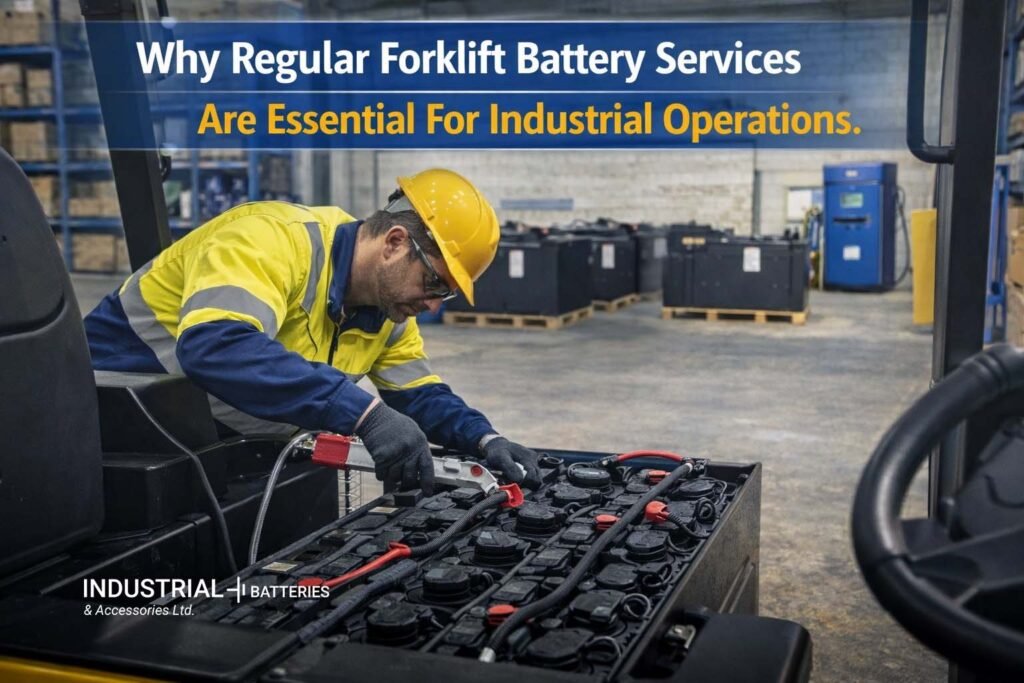
Forklift batteries do much more than start a truck. In many industrial sites, they perform power lifting, moving, loading, and stacking for hours. When the battery is healthy, the truck works as expected. When the battery is ignored, the operation can slow down. That is why regular forklift battery services matter. They help protect uptime, reduce avoidable failures, and keep daily work moving safely and steadily.
Many businesses wait until a battery shows a clear problem. By that point, the issue may already be expensive. A drop in runtime, slow charging, excess heat, corrosion, or damaged connectors usually mean the battery has been under strain for some time. Good forklift battery maintenance is about finding those signs early. It is about preventing failure before it affects operations.
Forklift Batteries Work Hard Every Day
In an industrial setting, forklift batteries are under constant pressure. They support long shifts, repeated stops and starts, heavy loads, and frequent charging cycles. In some warehouses, one battery may work through a full shift and then return for charging right away. Regular industrial forklift battery service helps catch wear before it becomes downtime.
A battery does not need to fail to hurt productivity. Even a battery that still powers the truck can create problems if it runs short too early, charges unevenly, overheats, or loses water too quickly. OSHA warns against overcharging, undercharging, and using batteries beyond the manufacturer’s recommended service life, as these practices can damage the battery and make recharging more difficult. This is one reason forklift battery servicing should be treated as part of normal fleet care.
Regular Service Helps Prevent Downtime
Downtime is one of the clearest reasons to invest in forklift battery maintenance services. When a battery fails in the middle of work, it not only affects one truck. It can delay loading, create gaps in shipping, slow warehouse movement, and force workers to change plans quickly. Preventive service reduces that risk by checking battery condition before performance falls too far.
Routine service often includes checking charge patterns, cable condition, connectors, corrosion, fluid levels, and heat. OSHA says battery cables and cable connectors should be checked regularly, and equipment should be removed from service if insulation is worn or contacts are damaged. That guidance shows why regular checks are part of keeping the truck safe and usable.
Battery Maintenance Extends Service Life
Batteries have a high operating cost, so getting the most life from them matters. One of the biggest benefits of forklift battery maintenance is longer service life. Good care helps the battery hold charge better, deliver more stable power, and age more slowly. Poor care has the opposite effect. It can shorten battery life, reduce performance, and increase replacement costs sooner than expected.
Watering is a good example. CCOHS says lead-acid batteries should generally be watered after they are fully charged and cooled, and distilled water should be used instead of tap water. It also says batteries should not be watered before or during charging because water may boil over and acid may leak. These steps may seem small, but improper watering can cause real damage over time.
Cleaning also matters. Corrosion on terminals, connectors, and the battery top can lead to poor electrical contact and more heat. Battery handling specialists note that cleaning the case and controlling corrosion are basic parts of forklift battery servicing, as buildup can shorten battery life and create unnecessary problems.
Service Supports Workplace Safety
Forklift batteries are not heavy pieces of equipment. Lead-acid batteries can expose workers to acid, and charging can create gas that must be managed carefully. OSHA says charging should occur in designated areas, charging equipment should be protected from damage, and vent caps should remain in place during charging to prevent electrolyte spray.
CCOHS also says charging areas should be approved, well-ventilated, and supported with emergency eyewash or shower access where needed.
Regular service supports this safety system. It helps ensure that connectors are not damaged, that venting is not blocked, that watering is done correctly, and that workers are not dealing with overheating or leaking batteries. A good service routine also provides teams with a clear process for reporting unusual heat, smells, swelling, or low runtime before the condition becomes unsafe.
Better Service Improves Daily Performance
Many managers think about service only in terms of avoiding breakdowns. That is important, but service helps day-to-day performance. A well-maintained battery usually charges more evenly, holds its voltage better, and delivers more dependable runtime. That means operators are less likely to lose power during key tasks. It also makes daily planning easier because the fleet behaves more predictably.
This becomes even more important in busy facilities. If trucks are working across long shifts, even a modest drop in battery performance can create delays. The best way to avoid that is regular forklift battery servicing, not guesswork. Scheduled inspections help teams see trends, such as repeated overheating, faster water loss, or shorter runtime, before they become major interruptions.
What Good Forklift Battery Service Usually Includes
A proper service routine does not need to be complicated, but it should be consistent. Most strong forklift battery services include inspection, cleaning, fluid checks, cable review, connector review, charging review, and performance monitoring. For lead-acid batteries, equalization charging and correct watering are important parts of care. Battery maintenance guides from handling specialists describe watering, washing, and equalization as core tasks for long battery life.
A useful service plan often includes:
- Checking cables and connectors for wear
- Looking for corrosion or acid residue
- Reviewing charging habits
- Confirming water levels and watering method
- Watching for heat or uneven performance
- Planning repairs or rebuilds before full failure
These checks are simple, but they can prevent bigger problems later.
Why Waiting Costs More
Reactive services often look cheaper at first, but they usually cost more in the long run. Emergency repairs, rushed battery replacement, truck downtime, delayed orders, and damaged connectors all add cost. A planned approach is usually easier, safer, and less disruptive.
Regular industrial forklift battery service helps businesses move from surprise problems to predictable maintenance. That shift matters because industrial operations depend on consistency. Batteries that receive routine care are more likely to support that consistency over time.
Final Thoughts
Regular forklift battery services are essential because they protect runtime, extend battery life, support safety, and reduce unexpected downtime. They also help businesses make better use of their equipment investment by catching small issues before they become larger failures. Battery care should be part of the operating plan.
At Industrial Batteries Accessories Ltd, we see forklift battery maintenance, servicing, and long-term care as practical steps that help industrial fleets stay reliable every day.