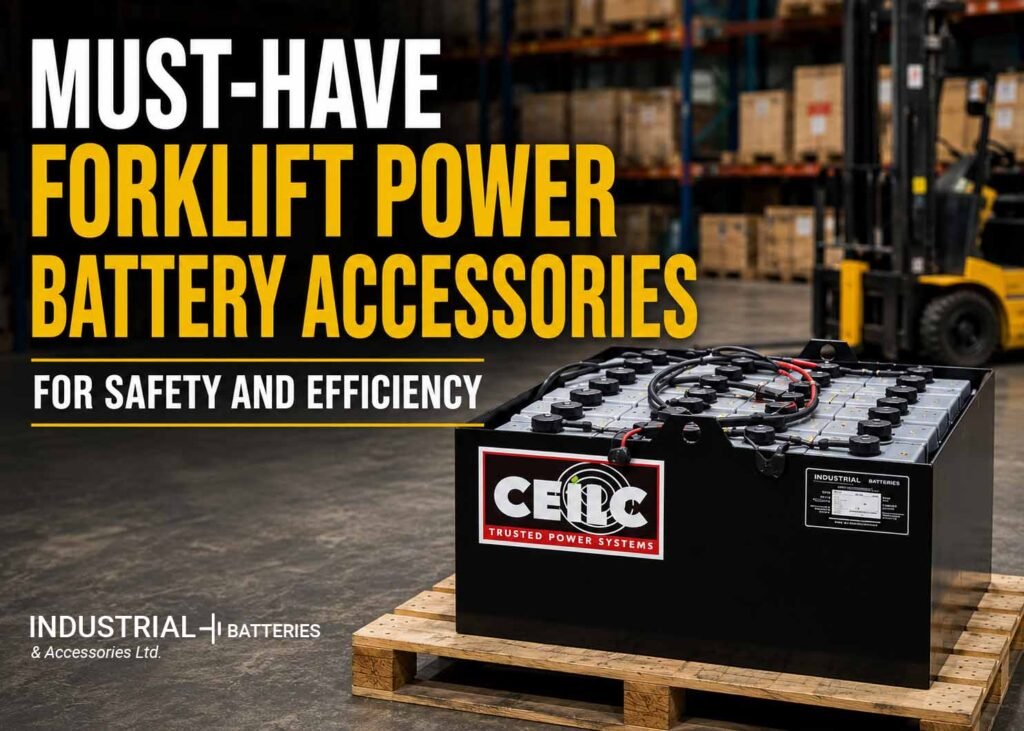
Forklift batteries do more than power equipment. They support daily movement, warehouse timing, operator safety, and overall productivity. When a battery is not handled, charged, watered, or maintained properly, it can slow down the whole operation. It can also create safety risks for workers and damage expensive equipment.
That is why forklift battery accessories matter. The right accessories help teams charge batteries safely, move them properly, monitor performance, and reduce unnecessary downtime. They also help extend battery life, which is important for warehouses, distribution centres, manufacturing plants, and logistics companies that depend on electric forklifts every day.
This guide explains the must-have Forklift Power Batteries Accessories every operation should consider for better safety, cleaner workflow, and stronger battery performance.
Why Forklift Battery Accessories Matter
A forklift battery is heavy, powerful, and expensive. It needs proper care from the moment it is charged to the moment it is placed back into service. Without the right industrial battery accessories, even a good battery can wear out faster than expected.
Accessories help workers handle batteries correctly. They also reduce manual strain, prevent spills, support safer charging, and make inspections easier. In busy Canadian warehouses, these details matter because small problems can quickly affect shift schedules and operating costs.
Good accessories do not replace proper training. But they do give trained workers the tools they need to handle batteries with more control and less risk.
Battery Chargers
A reliable charger is one of the most important forklift battery accessories. The charger must match the battery voltage, capacity, and chemistry. Using the wrong charger can reduce battery life, cause overheating, or lead to poor performance during shifts.
For lead-acid forklift batteries, the charger should support safe and complete charging cycles. For lithium options, the charging system must be compatible with the battery management system. A proper charger helps avoid undercharging, overcharging, and charging delays.
Warehouses with multiple forklifts should also think about charger placement. A well-planned charging area reduces traffic issues and keeps operators from wasting time moving equipment around.
Battery Watering Systems
Lead-acid forklift batteries need proper watering. If water levels are too low, battery plates can become exposed and damaged. If too much water is added, the battery can overflow during charging. Both situations can shorten battery life and create safety concerns.
A single-point watering system makes this task easier and more consistent. Instead of opening each cell one by one, workers can fill the battery through one connected system. This saves time and reduces the chance of uneven watering.
Watering tools are especially helpful in operations with many batteries. They support better maintenance habits and help reduce human error.
Watering Guns And Deionizers
A watering gun helps workers add water more safely and accurately. It can reduce splashing and help prevent overfilling. This is useful in fast-paced environments where battery maintenance must be done quickly but carefully.
A deionizer is also important when water quality is a concern. Regular tap water may contain minerals that can affect battery performance over time. Deionized water helps protect the battery cells and supports longer battery life.
For companies focused on forklift power battery safety, proper watering tools are not optional. They are part of responsible battery care.
Battery Handling Equipment
Forklift batteries are extremely heavy. Moving them without proper equipment can be dangerous. Battery handling tools help workers remove, transfer, and install batteries safely.
Common options include battery carts, transfer carriages, lifting beams, roller stands, and extraction systems. The right choice depends on the size of the fleet, battery weight, available space, and how often batteries are changed.
Manual handling should be avoided whenever possible. A dropped or mishandled battery can damage equipment, injure workers, and create costly downtime. Proper handling equipment protects both people and assets.
Battery Connectors And Cables
Connectors and cables may seem like small parts, but they play a major role in daily performance. Damaged connectors can cause poor power transfer, heat buildup, charging issues, or unexpected equipment problems.
High-quality battery connectors should fit properly and be rated for the correct voltage and current. Cables should be inspected often for cracks, cuts, exposed wires, or loose connections.
If connectors are worn or damaged, they should be replaced quickly. Ignoring connector problems can affect forklift performance and create avoidable safety risks.
Battery Stands And Racks
Battery stands and racks help keep the charging area organized. They provide a stable place to store batteries and can help reduce floor clutter. This is important in warehouses where space is limited and traffic moves quickly.
A clean battery area also supports safer inspections and maintenance. Workers can access batteries more easily, spot problems faster, and avoid unnecessary lifting or awkward movement.
Proper storage is an important part of forklift power battery safety. Batteries should not be left in random locations where they can block pathways or create hazards.
Personal Protective Equipment
Battery work requires proper personal protective equipment. Workers may need face shields, safety glasses, gloves, aprons, and protective footwear, depending on the task and battery type.
This is especially important when working with lead-acid batteries because electrolyte exposure can be harmful. Even routine watering or inspection should be handled with care.
PPE should be easy to access in the battery area. If protective gear is stored too far away, workers may skip it when they are busy. Keeping it close supports safer habits.
Spill Kits And Neutralizing Supplies
Spill response supplies are essential in areas where lead-acid batteries are used. A battery spill kit may include absorbent materials, neutralizing agents, disposal bags, and instructions for safe cleanup.
Spills should never be treated casually. They can damage floors, equipment, and clothing. They can also create health and safety risks if handled incorrectly.
Having a spill kit nearby helps workers respond faster and more safely. It also shows that the company has planned for real workplace risks, not just everyday operations.
Battery Monitoring Devices
Battery monitoring devices help teams track performance, charge cycles, temperature, and usage patterns. These tools can show when a battery is being overused, undercharged, or charged at the wrong time.
This is useful for companies that want to reduce downtime and manage battery replacement planning. Instead of guessing when a battery is failing, managers can use data to make better decisions.
Monitoring tools are also helpful for larger fleets. They can identify bad habits, such as opportunity charging lead-acid batteries too often or returning batteries to service before they are fully ready.
Ventilation Support For Charging Areas
Battery charging areas need proper airflow, especially when charging lead-acid batteries. Good ventilation helps reduce the buildup of gases during charging and supports a safer work environment.
The charging area should be clean, clearly marked, and free from ignition sources. It should also have enough space for workers to move safely around chargers and batteries.
Ventilation is not an accessory in the small-tool sense, but it is part of a safe battery setup. It should be included in any serious plan for forklift power battery safety.
Battery Cleaning Supplies
Dirt, dust, corrosion, and residue can affect battery performance and safety. Battery cleaning supplies help workers keep the battery surface and terminals in better condition.
Cleaning should be done carefully and according to the correct process. The goal is to remove buildup without damaging parts or exposing workers to risk.
A clean battery is easier to inspect. It also reduces the chance of poor connections and electrical issues. For busy warehouses, regular cleaning can help prevent small maintenance problems from becoming bigger ones.
Safety Signs And Charging Area Markers
Clear signage helps workers understand where batteries should be charged, where PPE is required, and where safety rules must be followed. Floor markings can also help separate the battery area from regular forklift traffic.
This is useful in facilities with new staff, multiple shifts, or high traffic. Good signs reduce confusion and remind workers to follow safe procedures.
Forklift battery accessories are not only tools and parts. They also include the safety items that make the work area more organized and easier to manage.
Maintenance Logs And Inspection Checklists
A simple maintenance log can prevent many problems. Workers should record watering, charging, inspections, cleaning, repairs, and battery issues. This helps managers see patterns and act before a failure happens.
Checklists are also useful because they make inspections more consistent. Instead of relying on memory, workers can follow the same steps each time.
Good records support better battery life, safer handling, and smarter replacement planning. They also help companies understand how batteries are being used across shifts.
How To Choose The Right Accessories
The best accessories depend on your battery type, forklift fleet size, shift schedule, charging area, and maintenance routine. A small warehouse with one or two forklifts may need a simple setup. A large facility with multiple shifts may need advanced handling systems, monitoring tools, and organized charging stations.
Before buying industrial battery accessories, look at your current problems. Are batteries taking too long to charge? Are water levels being missed? Are cables wearing out? Are workers moving batteries manually? Are breakdowns happening during shifts?
The right accessory should solve a real problem. It should improve safety, reduce downtime, or make maintenance easier.
FAQs
What Are The Most Important Forklift Battery Accessories?
The most important forklift battery accessories include compatible chargers, watering systems, battery handling equipment, connectors, PPE, spill kits, battery stands, and maintenance tools.
Do All Forklift Batteries Need Watering Accessories?
No. Watering accessories are mainly used for lead-acid forklift batteries. Lithium forklift batteries do not require watering, but they still need compatible chargers and proper monitoring.
Why Is Battery Handling Equipment Important?
Forklift batteries are very heavy. Handling equipment reduces the risk of injury, battery damage, and unsafe manual lifting during battery changes or maintenance.
How Do Accessories Improve Forklift Power Battery Safety?
Accessories support safer charging, handling, watering, storage, cleaning, and spill response. They help workers follow safer processes and reduce common workplace risks.
Should Warehouses Use Battery Monitoring Devices?
Battery monitoring devices are useful for fleets that want better control over charging, usage, battery health, and replacement planning. They are especially helpful in busy multi-shift operations.
Conclusion
Forklift battery accessories play a major role in safety, efficiency, and long-term battery performance. The right tools help workers charge batteries correctly, handle them safely, maintain water levels, prevent damage, and keep the battery area organized.
For Canadian warehouses and industrial facilities, these details can reduce downtime, improve daily workflow, and protect a major equipment investment. A strong battery setup is not only about the battery itself. It is also about the accessories that support it every day. For dependable Forklift Power Batteries Accessories, forklift battery accessories, and industrial battery accessories, contact Industrial Batteries for practical support and the right battery solutions for your operation.