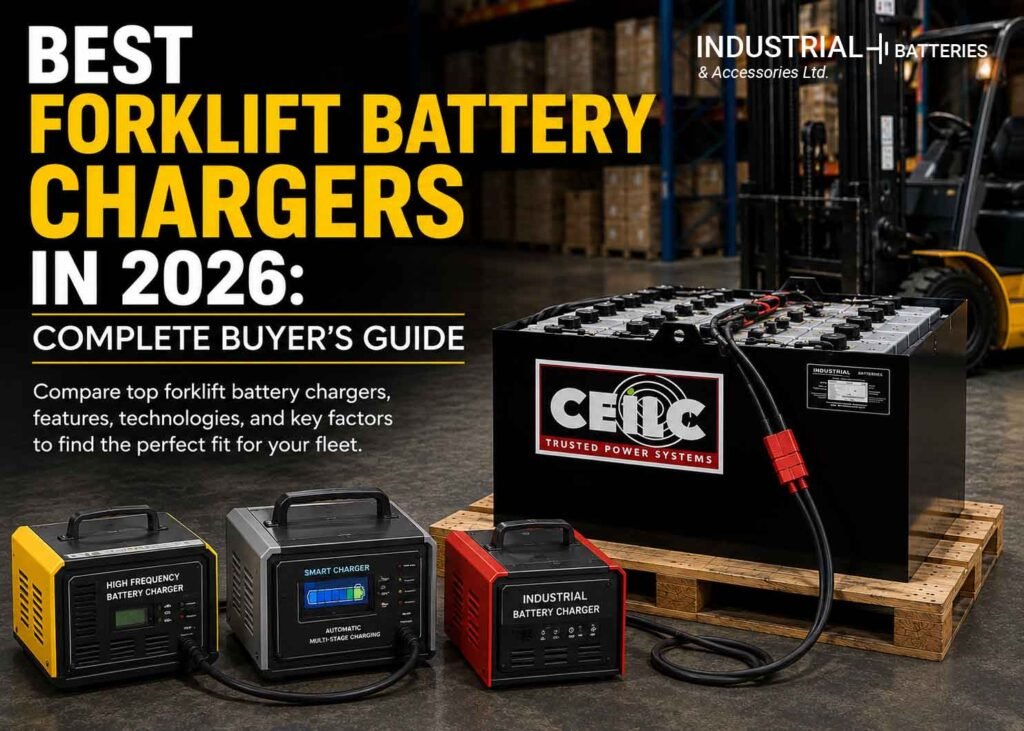
Choosing a forklift battery charger in 2026 is not only about finding a machine that can refill a battery. The right charger affects uptime, battery life, safety, energy use, and daily workflow. In a busy warehouse, a slow or poorly matched charger can create delays across the whole shift.
A good charger should match your battery type, voltage, amp-hour capacity, charging window, and work schedule. It should also fit your charging area and support safe use by trained staff. This forklift battery charger buying guide explains what to look for before you invest in an industrial forklift battery charger for your operation.
Why The Right Forklift Charger Matters
Forklift batteries are expensive, and chargers play a major role in how long those batteries last. A charger that is too weak may leave batteries undercharged. A charger that is too aggressive may create heat and shorten battery life. A charger that does not match the battery can create safety and performance problems.
For Canadian warehouses, distribution centres, food facilities, manufacturing plants, and logistics operations, the best forklift charger for warehouse use is the one that supports real working conditions. It should help equipment return to service on time without putting unnecessary stress on the battery.
The right charger also helps reduce downtime. When batteries are charged properly, operators spend less time waiting and more time moving product.
Start With Battery Type
Before choosing a charger, confirm the battery type. Most forklift fleets use lead-acid batteries, lithium-ion batteries, or a mix of both. Each battery type has different charging needs.
Lead-acid batteries usually need a complete charging cycle and proper cool-down time. They also require careful charging area setup because industrial lead-acid batteries used in forklifts need safe handling and charging practices, including attention to ventilation and manufacturer guidance.
Lithium-ion batteries often allow faster charging and opportunity charging, but they still need a compatible charger. The charger must communicate properly with the battery system and follow the manufacturer’s limits.
Never assume that one charger is safe for every battery in your fleet. Compatibility must come first.
Match Charger Voltage Correctly
Voltage matching is one of the most important rules. A 24-volt battery needs a 24-volt charger. A 36-volt battery needs a 36-volt charger. A 48-volt battery needs a 48-volt charger. Larger fleets may also use 72-volt or 80-volt systems.
If the charger voltage does not match the battery, the battery may not charge correctly. In some cases, it can damage the battery or charger.
Check the battery nameplate before buying. If your warehouse uses different forklift models, list each battery voltage clearly. This prevents charging mistakes and helps staff connect each battery to the correct charger.
Check Amp-Hour Capacity
Amp-hour capacity tells you how much energy the battery can store. The charger must be sized for that capacity. If the charger output is too low, charging may take too long. If it is too high, the battery may experience stress, heat, or reduced life.
A good supplier will not recommend a charger without asking about battery amp-hour ratings. This detail matters as much as voltage.
For a single-shift warehouse, a slower overnight charger may be enough. For a high-use fleet, a faster charger may be needed. The best choice depends on how many hours the forklift works and how much time is available for charging.
Consider A High Frequency Forklift Battery Charger
A high frequency forklift battery charger is often a strong choice for modern warehouses. These chargers are usually more energy-efficient than older conventional chargers. They are also often smaller, lighter, and better at controlling the charging process.
High-frequency chargers can help reduce energy waste and may support better battery care when matched correctly. For businesses watching long-term costs, this can make a real difference.
Still, high frequency does not automatically mean “best” for every fleet. The charger must suit the battery, electrical supply, duty cycle, and charging schedule. A proper match is always more important than buying the newest option.
Look At Your Shift Schedule
Your shift pattern will shape the charger you need. A warehouse running one shift has different charging needs than a warehouse running two or three shifts.
If forklifts work during the day and charge overnight, standard charging may be enough. If forklifts run across multiple shifts, you may need faster charging, extra chargers, spare batteries, or opportunity charging.
Ask practical questions before buying. How many hours does each forklift run? How many breaks are available for charging? Do operators return equipment to the same area? Do batteries have enough time to cool down? These answers help you choose the right charger setup.
Check Charging Speed Carefully
Fast charging can be useful, but it must be handled correctly. A charger that fills batteries quickly can reduce downtime, especially in busy operations. But if the battery is not designed for that charging rate, fast charging can cause heat and reduce battery life.
Do not choose a charger only because it promises speed. Choose one that delivers the right speed safely.
For many businesses, the best charger is not the fastest model. It is the charger that gives steady, reliable charging without damaging the battery or disrupting the workday.
Review The Charging Area
The charging area should be safe, clean, and easy to access. Chargers should not block walkways, exits, loading areas, or forklift lanes. Cables should not stretch across traffic areas where they can be damaged or create trip hazards.
Battery charging areas also need proper safety planning. OSHA guidance for powered industrial trucks notes the need for adequate ventilation to avoid hydrogen gas buildup, neutralization material nearby, fire protection, and protection for charging equipment from truck damage.
This matters most for lead-acid battery charging, but every charging area should be organized and controlled. A good charger cannot perform well in a poor setup.
Confirm Electrical Requirements
An industrial forklift battery charger must match your facility’s electrical capacity. Before buying, check input voltage, phase requirements, amperage, breaker size, wiring, and available power.
This step is often missed. A business may buy the right charger for the battery but later discover that the building needs electrical upgrades. That can delay installation and increase cost.
If you plan to grow your fleet, think ahead. It may be better to design your charging area for future needs instead of only today’s equipment.
Look For Smart Charger Features
Modern chargers often include features that make charging easier and safer. These may include automatic shutoff, charge status displays, fault alerts, temperature control, equalization settings, and usage tracking.
Smart features reduce guesswork. Operators can see whether a battery is charging, complete, or showing a fault. Managers can also track charger use and spot problems before they become expensive.
For larger fleets, data can help improve battery rotation, charging schedules, and replacement planning.
Check Cable And Connector Quality
Cables and connectors are easy to overlook, but they affect charger performance every day. Damaged cables can create poor connections, heat, downtime, and safety issues.
The charger should come with cables and connectors that match your battery and forklift system. They should be properly rated, easy to handle, and long enough for safe use without crossing busy paths.
Inspect connectors regularly. A good charger cannot work properly if the connection point is worn, loose, or damaged.
Think About Energy Efficiency
Energy use matters more in 2026 because businesses are watching operating costs closely. A more efficient charger can reduce wasted power over time, especially in larger fleets.
High-frequency chargers are often chosen for this reason. They can support better energy efficiency when matched to the right battery and application.
When comparing chargers, look beyond the purchase price. A cheaper charger may cost more over time if it wastes energy, charges slowly, or shortens battery life.
Choose A Charger That Fits The Warehouse
The best forklift charger for warehouse use should fit your space, workflow, and staff habits. A charger that is difficult to access may be ignored or misused. A charger with confusing controls may lead to mistakes.
Look for clear displays, simple operation, strong cables, proper mounting options, and easy service access. If multiple employees handle charging, the system should be easy to understand after proper training.
Good labelling also helps. Mark chargers by voltage, battery type, and approved use. This reduces the chance of someone connecting the wrong battery.
Compare Warranty And Service Support
A forklift charger is part of your daily operation. If it fails, your forklifts may sit idle. That is why warranty, parts access, and service support matter.
Choose a supplier that understands industrial forklift battery charger needs. They should help with charger sizing, compatibility, setup questions, and future support.
Good service is especially important for businesses with multiple forklifts or mixed battery systems. When problems happen, you need practical help, not vague answers.
Common Mistakes To Avoid
One common mistake is buying a charger based only on price. Another is choosing a charger without checking voltage, amp-hour capacity, and battery chemistry. Some businesses also forget to review electrical supply before ordering.
Another mistake is buying a charger for today’s fleet without thinking about growth. If you expect to add more electric forklifts, your charging setup should be planned with that in mind.
Avoid guessing. A charger should be selected with clear battery data, workload details, and facility requirements.
FAQs
What Is The Best Forklift Battery Charger In 2026?
The best forklift battery charger in 2026 is the one that matches your battery type, voltage, amp-hour capacity, shift schedule, and charging area. There is no single best charger for every warehouse.
Is A High Frequency Forklift Battery Charger Worth It?
Yes, a high frequency forklift battery charger can be worth it for many operations because it is often more efficient and compact than older charger types. It still needs to be matched correctly to your battery and workload.
Can I Use One Charger For Different Forklift Batteries?
Sometimes, but only if the charger is designed for those batteries and properly configured. Never connect different batteries to one charger without confirming compatibility.
What Is The Best Forklift Charger For Warehouse Use?
The best forklift charger for warehouse use should be reliable, correctly sized, easy to operate, energy-efficient, and supported by good service. It should also fit your daily charging schedule.
How Do I Know What Size Charger I Need?
Check the battery voltage and amp-hour rating first. Then look at your available charging time and shift schedule. A battery supplier can help calculate the right charger size.
Should I Choose Fast Charging?
Fast charging can help high-use fleets, but only if the battery supports it. Charging too quickly with the wrong setup can reduce battery life and create heat issues.
Conclusion
Buying the right charger in 2026 takes more than a quick price comparison. A proper forklift battery charger buying guide should always consider battery type, voltage, amp-hour capacity, charging speed, warehouse schedule, electrical supply, safety, smart features, and long-term support.
The best charger is the one that keeps your forklifts ready without damaging batteries or slowing down operations. For Canadian warehouses, the right industrial forklift battery charger can support better uptime, safer charging, and lower long-term costs. For help choosing a high frequency forklift battery charger or the best forklift charger for warehouse use, contact Industrial Batteries for practical guidance and dependable charging solutions for your fleet.