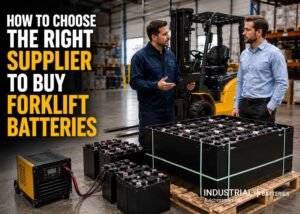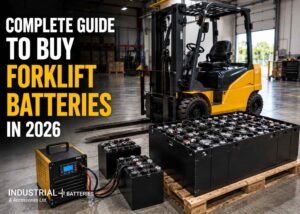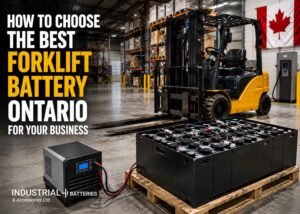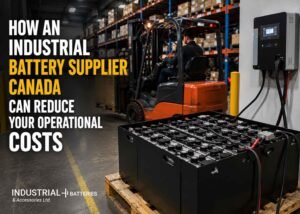
Choosing the right forklift battery is not only about price. It affects how long your equipment runs, how often work stops, how safely your team handles charging, and how much you spend over the life of the battery.
In Toronto warehouses, forklifts often work through tight schedules. Some facilities run one shift. Others run two or three. Some handle light pallets. Others move heavy loads all day. That means the right forklift battery Toronto businesses need should match the equipment, workload, charging setup, and working conditions.
A battery that works well in one warehouse may not be right for another. This guide explains how to choose the right forklift batteries Toronto warehouse teams can rely on for safe and steady performance.
Start With The Forklift Specifications
Before choosing any battery, check the forklift specifications. The battery must match the forklift’s voltage, compartment size, weight range, and connector type.
Voltage is one of the first details to confirm. Common forklift battery voltages include 24V, 36V, 48V, and 80V, depending on the equipment. If the voltage does not match, the battery will not work properly and may damage the forklift or charging system.
Battery size also matters. The battery must physically fit inside the compartment. It must also meet the required weight range because the battery often works as part of the forklift’s counterbalance. A battery that is too light or too heavy can affect stability and safe operation.
Understand Your Daily Workload
A warehouse forklift battery Toronto operation needs should match the hours of use. A forklift used for light indoor movement does not need the same battery capacity as one used all day in a busy distribution centre.
Look at how long the forklift runs per shift. Check whether operators use it continuously or only at certain times. Think about load weight, travel distance, lift height, floor conditions, and how often the forklift stops and starts.
A battery with low capacity may run out before the shift ends. A battery with too much capacity may cost more than needed. The goal is to choose a battery that supports the real workload without wasting money.
Choose The Right Battery Type
Most warehouses choose between lead-acid and lithium-ion batteries. Both can work well, but they suit different operations.
Lead-acid batteries are common in many industrial settings. They usually cost less upfront and are widely available. They need proper watering, ventilation, charging time, and cool-down time. They are often a good fit for businesses with planned charging schedules and trained maintenance staff.
Lithium-ion batteries usually cost more upfront, but they can charge faster and need less daily maintenance. They may be useful for busy warehouses that need opportunity charging during breaks or have limited space for battery rooms.
The right electric forklift battery Toronto businesses choose should depend on usage, budget, maintenance capacity, and charging needs.
Review Your Shift Schedule
Shift schedule plays a major role in battery selection. A single-shift warehouse may be able to use one battery per forklift and charge it overnight. A multi-shift warehouse may need spare batteries, faster charging, or lithium-ion options.
If your forklifts work eight hours a day and rest overnight, a standard battery setup may be enough. If your forklifts run almost continuously, you need a stronger plan.
Ask these questions before buying:
How many hours does each forklift run per day?
Is there enough time for full charging?
Do batteries need to be swapped between shifts?
Can operators charge during breaks?
Is downtime affecting order movement?
Your answers will help you choose the right forklift battery for warehouse use.
Check Charger Compatibility
The battery and charger must work together. A good battery can fail early if it is charged with the wrong charger.
Before buying a new battery, check your current charger. Confirm voltage, amp-hour range, connector type, and charging profile. If you are switching from lead-acid to lithium-ion, you may need a different charger.
Do not assume your old charger will work with a new battery. A mismatched charger can cause slow charging, overheating, undercharging, or long-term battery damage.
A reliable supplier should always ask about your charger before recommending forklift batteries Toronto warehouses can use safely.
Think About Charging Space
Toronto warehouses often deal with space limits. Every square foot matters. That includes space used for battery charging, storage, and maintenance.
Lead-acid batteries may need a dedicated charging area with ventilation, PPE, watering tools, spill response supplies, and enough space for safe handling. If your warehouse does not have a proper battery room, this can affect your decision.
Lithium-ion batteries usually need less charging infrastructure, but they still need safe electrical setup and proper charger placement.
Before choosing a battery, look at your facility layout. The best battery choice should fit your building, not just your forklift.
Consider Maintenance Needs
Maintenance is one of the biggest differences between battery types. Lead-acid batteries need regular watering, cleaning, equalizing charges, and inspections. If these tasks are missed, battery life can drop quickly.
Lithium-ion batteries need less routine maintenance, but they still need proper charging and safe use. They should be monitored and used according to supplier guidance.
If your warehouse has trained staff and a strong maintenance routine, lead-acid may work well. If your team struggles to keep up with watering and battery checks, a lower-maintenance option may be worth considering.
Match Battery Capacity To Runtime
Battery capacity is usually measured in amp-hours. Higher capacity usually means longer runtime, but it can also mean higher cost and more weight.
Do not choose capacity by guessing. Match it to the forklift’s daily demand. If the forklift regularly runs out of power before the shift ends, you may need more capacity or a better charging plan. If the battery always has plenty of charge left, you may be paying for capacity you do not need.
A good forklift battery for warehouse use should give enough runtime without creating unnecessary cost.
Think About Temperature And Work Conditions
Warehouse conditions can affect battery performance. Cold storage, loading docks, outdoor movement, and seasonal temperature changes can all influence battery choice.
In Canadian facilities, winter can also create extra strain if forklifts move between indoor and outdoor areas. Cold temperatures can reduce performance, especially if the battery is already weak or poorly maintained.
If your forklifts work in cold areas, wet conditions, dusty spaces, or demanding industrial environments, tell your supplier. The battery should be selected for the real working environment, not only the forklift model.
Look At Total Cost, Not Just Purchase Price
The cheapest battery is not always the lowest-cost option. A battery with a lower purchase price may cost more if it needs frequent maintenance, fails early, causes downtime, or does not last through shifts.
When comparing options, consider purchase price, expected lifespan, maintenance needs, charging costs, downtime risk, charger compatibility, and warranty support.
A higher-quality warehouse forklift battery Toronto businesses can depend on may save money over time if it reduces delays and lasts longer.
Check Warranty And Support
Warranty matters, but support matters too. If the battery does not perform properly, you need someone who can help.
Ask what the warranty covers and what it does not cover. Ask how service is handled. Ask whether support is available for charging issues, connectors, watering systems, replacement parts, and future battery needs.
A battery supplier should not disappear after the sale. Good support helps protect your investment and keeps your forklifts working.
Choose A Supplier That Understands Warehouses
A supplier should understand more than battery specs. They should understand warehouse operations, shift pressure, charging routines, safety needs, and downtime costs.
The right supplier will ask questions before recommending a battery. They will want to know your forklift model, current battery, charger, daily runtime, work environment, and budget.
This is important because every facility is different. A small warehouse in Toronto may need a simple replacement battery. A large distribution operation may need a full battery and charger plan.
Avoid Common Buying Mistakes
One common mistake is buying a battery based only on price. Another is replacing the old battery with the same type without checking whether your operation has changed.
Some warehouses also forget to check charger compatibility. Others buy a battery that fits the forklift but does not support the full shift.
Avoid guessing. A forklift battery is a major part of your operation. It should be selected with proper information and expert guidance.
FAQs
What Is The Best Forklift Battery For Toronto Warehouses?
The best forklift battery depends on your forklift model, shift schedule, workload, charging setup, and maintenance capacity. There is no single best option for every warehouse.
Should I Choose Lead-Acid Or Lithium-Ion Forklift Batteries?
Lead-acid batteries may suit operations with planned charging and regular maintenance. Lithium-ion batteries may suit busy warehouses that need faster charging and less routine maintenance.
How Do I Know What Battery Size My Forklift Needs?
Check the forklift specifications, current battery nameplate, voltage, compartment size, weight range, and connector type. A supplier can help confirm the correct size before you buy.
Can I Use My Existing Charger With A New Forklift Battery?
Maybe, but it must be checked first. The charger should match the battery voltage, capacity, chemistry, and connector type. A mismatched charger can damage the battery.
Why Does Battery Weight Matter In A Forklift?
The battery often acts as part of the forklift’s counterbalance. If the battery is too light or too heavy, it can affect safe handling and equipment stability.
How Long Should A Forklift Battery Last In A Warehouse?
Battery life depends on battery type, usage, charging habits, maintenance, and working conditions. Proper charging and care can extend battery life and reduce replacement costs.
What Information Should I Give A Battery Supplier?
Share your forklift make and model, current battery details, charger information, shift schedule, average runtime, load type, and warehouse conditions. This helps the supplier recommend the right battery.
Conclusion
Choosing the right forklift battery in Toronto warehouses starts with understanding your equipment and daily operation. The battery must match the forklift, support the workload, work with the charger, and fit your charging space and maintenance routine.
A smart choice can reduce downtime, improve daily productivity, and protect your equipment investment. A poor choice can lead to charging problems, short runtime, safety concerns, and higher long-term costs. For dependable forklift battery Toronto support, electric forklift battery Toronto options, and practical guidance on forklift batteries Toronto warehouses can rely on, contact Industrial Batteries for the right battery solution for your business.