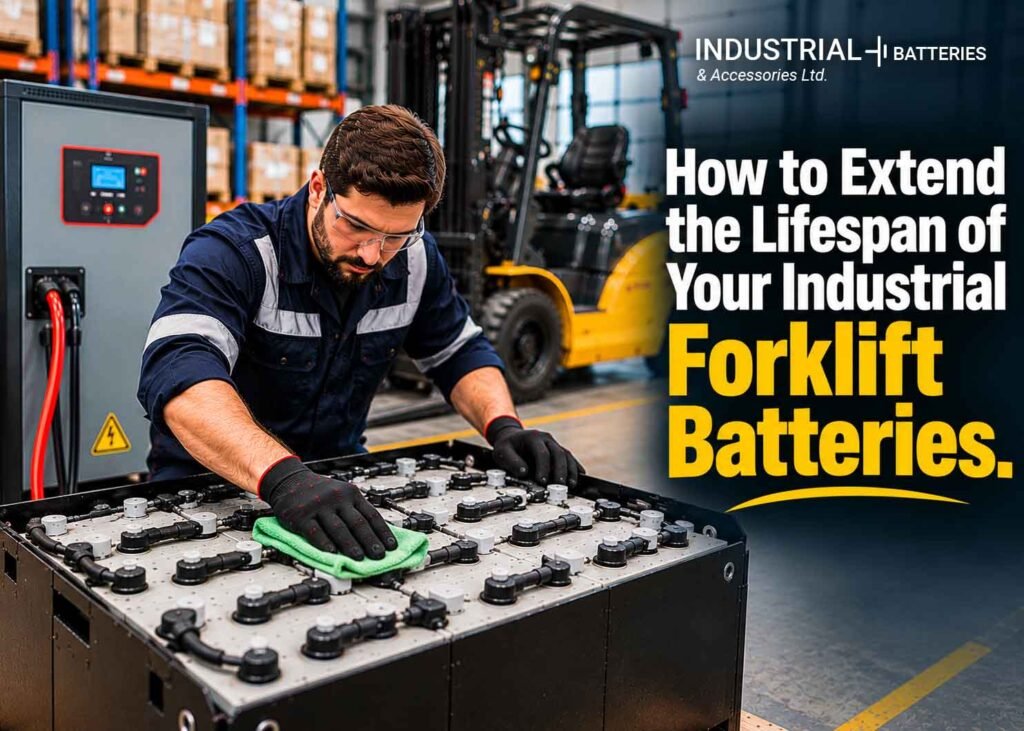
A battery that dies two years early doesn’t just cost you a replacement — it costs you downtime, labor, and a dent in your operating budget you didn’t plan for. With proper care, a traditional lead-acid forklift battery lasts about 5 to 7 years — but most fleets never get there, because a handful of small maintenance habits get skipped under daily pressure. Industrial Forklift Batteries represent one of the largest line items in a warehouse operation, often rivaling the cost of the forklift itself, which makes getting their lifespan right a real financial decision, not a nice-to-have. This blog walks through exactly what shortens battery life, what actually extends it, and how to build a maintenance routine your team will realistically stick to. bobcat
Key Takeaways
- With correct care, most lead-acid forklift batteries reach 1,500 charge cycles, roughly 5 to 7 years of service
- Forklift Battery Maintenance comes down to three core habits: proper watering, correct charging, and regular cleaning
- Overcharging and undercharging both shorten battery life — consistency matters more than intensity
- Opportunity charging (topping up mid-shift) is one of the fastest ways to cut a lead-acid battery’s lifespan short
- A written maintenance schedule, assigned to specific staff, consistently outperforms “whenever someone remembers”
Table of Contents
- What Actually Determines a Forklift Battery’s Lifespan?
- How Does Watering Affect Battery Life?
- What’s the Right Way to Charge a Forklift Battery?
- Why Does Cleaning Matter More Than People Think?
- What Is Equalization, and Why Does It Matter?
- How Can You Build a Maintenance Routine That Actually Works?
- What Does Replacing a Battery Early Actually Cost You?
What Actually Determines a Forklift Battery’s Lifespan?
A forklift battery’s lifespan comes down to charge cycles, not calendar years — each full discharge-and-recharge counts as one cycle, and most lead-acid batteries are rated for around 1,500 of them. A battery used aggressively across multiple shifts burns through those cycles faster than one used on a single shift, regardless of how old it is in actual years.
This is why two identical batteries in the same facility can have very different lifespans. Forklift Battery Life Extension isn’t about luck — it’s about how deliberately a battery is charged, watered, and maintained between cycles.
How Does Watering Affect Battery Life?
Watering is the single biggest lever on how long a lead-acid battery lasts, and it’s also the maintenance task most often done wrong. Water inside the cells gets consumed during charging, and if levels drop too low, the plates become exposed to air and start to degrade permanently.
Here’s what proper watering actually looks like:
- Water after charging, never before — adding water to a discharged battery dilutes the electrolyte incorrectly
- Check levels weekly on batteries in regular use; older batteries may need more frequent checks
- Fill only to the manufacturer’s recommended level, usually just above the plates — overfilling causes acid overflow during charging
- Use only approved water, never tap water, since mineral content can damage cells over time
- If a battery seems to need water more often than usual, have it inspected — that’s often an early warning sign of a charger issue
Skipping watering for even a few cycles can cause damage that no amount of later maintenance reverses.
What’s the Right Way to Charge a Forklift Battery?
The right charging routine means charging on a schedule tied to actual discharge level, not convenience, and letting the battery complete a full charge and cool-down cycle before it goes back into use. Both overcharging and undercharging generate excess heat, and heat is what actually breaks down the internal chemistry over time.
Opportunity charging — plugging a battery in for a quick top-up mid-shift instead of waiting for a proper break — feels efficient in the moment but is one of the fastest ways to shorten a lead-acid battery’s working life. It prevents the battery from completing its full charge cycle and builds up heat the battery never gets a chance to shed.
| Charging habit | Effect on battery life |
| Full charge, full cool-down | Extends lifespan as designed |
| Opportunity charging mid-shift | Shortens lifespan, builds heat damage |
| Charging below 20% discharge too often | Reduces usable capacity over time |
| Letting battery sit fully discharged | Causes sulfation, permanent capacity loss |
A battery should generally rest for 8 hours after charging before it’s used again, giving it time to cool. Skipping that rest period, shift after shift, adds up to real wear.
Why Does Cleaning Matter More Than People Think?
A dirty battery case holds acid residue and grime that creates a path for electrical current to leak across the top of the battery, slowly draining it even when it’s not in use. This is called “tracking,” and it’s a quiet drain on both performance and lifespan that’s easy to miss because it doesn’t cause an obvious failure.
Monthly washing with a neutralizing solution, followed by a thorough rinse and dry, keeps this from building up. It’s a simple task, but one that frequently gets skipped because it doesn’t feel urgent — until the battery starts underperforming for no obvious reason.
What Is Equalization, and Why Does It Matter?
Equalization is a controlled, extended charge that intentionally pushes the battery slightly past a normal full charge to remove sulfate buildup from the plates. Without it, sulfate crystals accumulate over repeated cycles and permanently reduce the battery’s usable capacity.
Most manufacturers recommend equalizing once a week, though this varies by usage intensity. Industrial Battery Maintenance programs that skip equalization tend to see batteries lose noticeable capacity within the first year or two, well ahead of their rated cycle count.
How Can You Build a Maintenance Routine That Actually Works?
A maintenance routine survives contact with a busy warehouse only if it’s written down, assigned to specific people, and tracked somewhere visible. Verbal reminders get forgotten during a rush shift; a checklist posted in the charging area doesn’t.
- Assign watering and visual inspection to a specific role, not “whoever’s free”
- Post a charging schedule near the charging station, including rest periods
- Log equalization dates per battery, not just per fleet
- Track which batteries are underperforming so patterns show up early
- Review the routine quarterly — what worked at 10 forklifts may not work at 30
What Does Replacing a Battery Early Actually Cost You?
Replacing a battery two or three years ahead of schedule means absorbing the full replacement cost while getting only 60-70% of the service life you paid for. On a fleet of ten or more forklifts, that gap compounds into a real line-item loss, not just an inconvenience.
Beyond the hard cost, early failures tend to happen without warning, creating unplanned downtime exactly when a shift can least afford it.
Not sure how your current batteries are holding up? Industrial Batt can assess your fleet’s charging setup and maintenance routine, and help you build a schedule that actually gets followed on the floor.
Frequently Asked Questions
How long should a forklift battery actually last with good maintenance?
Most lead-acid forklift batteries last 5 to 7 years, or around 1,500 charge cycles, with consistent watering, charging, and cleaning. Heavy multi-shift use or skipped maintenance can cut that significantly.
Is it bad to charge a forklift battery every time it’s used a little?
Yes. This is called opportunity charging, and it prevents the battery from completing a full charge-and-cool cycle. Over time, it builds up heat damage that shortens the battery’s overall lifespan.
How often should I water my forklift battery?
Weekly checks are standard for batteries in regular use, always after charging rather than before. Older batteries or ones showing faster water consumption should be checked more frequently and inspected if the pattern continues.
What’s the biggest mistake warehouses make with battery maintenance?
Skipping equalization charges and letting watering slide during busy periods. Both failures are invisible day-to-day but compound into permanently reduced capacity and a battery that dies years earlier than it should.
Can a forklift battery be repaired once it starts losing capacity, or does it need replacing?
It depends on the cause. Sulfation from missed equalization can sometimes be partially reversed early on, but significant capacity loss from prolonged neglect usually means replacement is the more practical option.