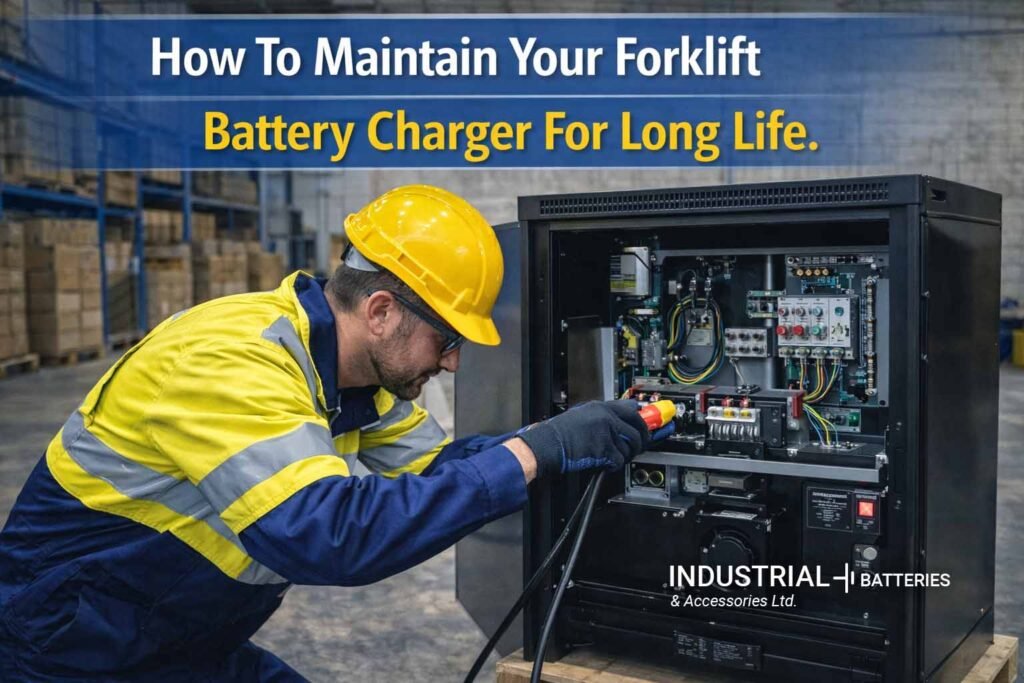
A forklift battery charger works hard every day. It helps keep forklifts ready for lifting, moving, loading, and daily warehouse work. When the charger is cared for properly, it can last longer and work more safely.
Many charger problems do not happen suddenly. They often start with small signs. Dust builds up. Cables become loose. Connectors wear down. Vents get blocked. Operators may pull the cable the wrong way. Over time, these small habits can lead to poor charging, heat, faults, and downtime.
Good forklift battery charger maintenance is not difficult. It only needs regular checks, clean habits, and quick action when something looks wrong.
Why Forklift Charger Maintenance Matters
A forklift charger is part of the whole battery system. If the charger does not work properly, the battery may not charge fully. It may also charge too slowly or heat up more than normal.
Poor charger care can lead to:
- Shorter battery life
- Longer charging time
- More charger faults
- Damaged cables and plugs
- Higher repair costs
- Unsafe charging conditions
- Forklifts not being ready for work
A charger that is maintained well gives more reliable performance. It also helps protect the battery, the forklift, and the people working around the charging area.
Keep The Charging Area Clean
The charging area should stay clean, dry, and open. Dust, dirt, moisture, and clutter can create problems around industrial chargers.
Do not store boxes, tools, or spare parts around the charger. Chargers need space for air to move. If the charger cannot release heat, internal parts may wear out faster.
A clean charging area also makes it easier to spot problems. You can quickly see loose cables, damaged plugs, spills, or warning lights.
Basic charging area care includes:
- Keeping floors clean and dry
- Removing clutter from around the charger
- Keeping vents clear
- Avoiding water near electrical equipment
- Making sure the charger is easy to reach
- Keeping the area well ventilated
This is one of the simplest industrial charger maintenance habits, but it makes a real difference.
Check Charger Cables Every Day
Cables are one of the most common problem areas. They are handled daily, so they can wear out faster than other charger parts.
Operators may pull the cable by the cord instead of the plug. Cables may get dragged across the floor. They may also be stepped on, twisted, or crushed by equipment.
Inspect the cable before use. Look for:
- Cracks in the outer cover
- Exposed wires
- Burn marks
- Stiff or bent sections
- Loose fittings
- Cuts or deep scratches
- Heat damage near the connector
If a cable looks damaged, do not keep using it. Damaged cables can affect charging and may create safety risks. Replacing a cable early is usually better than waiting for a larger failure.
Inspect Connectors And Plugs
Connectors must fit tightly and cleanly. A loose or worn connector can cause poor charging, heat, and electrical faults.
Check the plug and connector for signs of damage. Look for melted plastic, corrosion, worn contact points, loose pins, or a plug that feels too hot after charging.
A connector should not wobble badly when plugged in. It should also not need force to connect. If the plug does not fit properly, there may be wear, damage, or misalignment.
Good forklift charger care includes treating connectors gently. Operators should hold the plug body when connecting or disconnecting. They should not pull from the cable.
Keep Charger Vents Clear
Most chargers create heat during normal operation. That heat must escape. If vents are blocked, the charger may overheat.
Overheating can damage internal parts. It may also cause fault codes, shutdowns, or slow charging.
Keep all charger vents clear of dust, paper, plastic wrap, and nearby items. Do not place anything on top of the charger. Do not push the charger tightly against a wall unless the manufacturer allows it.
A charger needs breathing space. Good airflow helps the charger last longer.
Watch For Heat, Smells, And Sounds
One of the most important forklift charger maintenance tips is to use your senses. Many charger problems can be noticed before a full breakdown happens.
Pay attention to:
- Unusual heat
- Burning smell
- Buzzing sound
- Clicking sound
- Smoke
- Flickering display
- Repeated fault lights
- Slow charging
Some warmth is normal during charging. Strong heat is not normal. A burning smell or smoke should never be ignored.
If these signs appear, stop using the charger and have it checked. Do not keep restarting the charger to see if the problem goes away.
Clean Dust From The Charger Exterior
Dust can build up on the charger cabinet, vents, and nearby surfaces. This can affect airflow and make the charger run hotter.
Wipe the outside of the charger with a dry cloth. Do not spray water or cleaning liquid directly onto the charger. Electrical equipment should always be cleaned carefully.
For deeper cleaning, follow the manufacturer’s instructions or call a trained technician. Internal cleaning should not be done by untrained staff.
The goal is simple. Keep the charger clean enough that heat can escape and warning signs are easy to see.
Use The Right Charger For The Battery
A charger should match the battery it is charging. This includes voltage, battery type, and charging needs.
Using the wrong charger can damage the battery and charger. It can also cause slow charging, heat, and poor battery performance.
For example, a charger made for one battery type may not be right for another type. A lead-acid battery and a lithium battery often need different charging controls.
To maintain forklift battery charger performance, make sure every charger is clearly matched with the right battery. Labels can help operators avoid mistakes.
Do Not Interrupt Charging Without Reason
Frequent charging interruptions can affect battery performance and charger operation. Operators should avoid unplugging the battery too early unless the charging process allows it.
Some charging systems are designed for opportunity charging. Others are made for full charging cycles. The charging method should match the battery and charger type.
Train staff to follow the correct charging routine. This can prevent avoidable problems and help both the charger and battery last longer.
Keep Charger Settings Correct
Some chargers have settings for battery type, voltage, amp-hour rating, or charging profile. If these settings are wrong, the charger may not work properly.
Wrong settings can lead to undercharging, overcharging, heat, or fault codes.
Settings should be checked during installation and during service visits. They should not be changed by untrained operators.
Correct settings are a key part of industrial charger maintenance.
Protect The Charger From Impact
Forklift chargers are often installed in busy work areas. This means they can be hit by pallets, forklifts, carts, or equipment.
A strong impact can damage the cabinet, cables, display, or internal parts. Even if the charger still turns on, internal damage may appear later.
Place chargers in a safe location where they are easy to access but protected from traffic. Use barriers if needed. Keep charging cables off travel paths when possible.
A safe charger location helps prevent physical damage and daily wear.
Train Operators On Proper Charger Use
Many charger problems come from poor handling. This is why operator training is important.
Staff should know how to:
- Connect the charger properly
- Disconnect by holding the plug
- Report fault codes
- Spot cable damage
- Keep vents clear
- Avoid pulling or twisting cables
- Follow the correct charging schedule
- Stop using unsafe equipment
Training does not need to be complicated. Simple daily habits can prevent expensive repairs.
Schedule Regular Professional Inspections
Daily checks are important, but they do not replace professional service. A trained technician can test parts that operators cannot see.
A service visit may include checking output voltage, inspecting internal parts, testing cables, checking fans, reviewing settings, cleaning key areas, and identifying early signs of wear.
Regular service helps prevent unexpected failures. It also gives you a better idea of when repair or replacement may be needed.
Keep A Charger Maintenance Log
A maintenance log is a simple but useful tool. It helps track charger problems over time.
Record details such as:
- Date of inspection
- Fault codes
- Cable damage
- Connector issues
- Overheating signs
- Repairs completed
- Parts replaced
- Service visits
This helps spot repeated problems. It also makes it easier for a technician to diagnose the charger.
A log is especially helpful when several forklifts and chargers are used in the same facility.
Do Not Ignore Small Problems
Small charger problems often grow. A loose plug can become a burned connector. A blocked vent can lead to overheating. A fault code can turn into a full shutdown.
The best forklift charger care is early action. If something looks wrong, report it and check it. Waiting usually costs more.
Build A Simple Charger Care Routine
Forklift battery charger maintenance does not need to be complicated. Keep the area clean. Check cables. Watch for heat. Keep vents open. Use the right charger. Train operators. Schedule service before problems become serious.
These simple steps can help your charger last longer and perform more reliably.
For professional forklift charger maintenance support and practical charging system guidance, contact Industrial Batteries Accessories Ltd. to keep your equipment safer, cleaner, and ready for daily work.
FAQs
How Often Should A Forklift Battery Charger Be Checked?
A quick visual check should be done daily. A professional inspection should be scheduled based on usage, charger age, and work conditions.
What Is The Most Common Forklift Charger Maintenance Issue?
Damaged cables and worn connectors are very common. They are handled every day and can wear out over time.
How Do I Maintain A Forklift Battery Charger?
Keep the charger clean, check cables, inspect plugs, keep vents clear, use the correct battery match, and schedule regular service.
Can Dust Damage A Forklift Charger?
Yes. Dust can block airflow and make the charger run hotter. This can shorten the life of internal parts.
Why Does My Forklift Charger Get Hot?
A charger may get hot because of blocked vents, poor airflow, heavy use, damaged parts, or incorrect settings.
Should Operators Repair Charger Problems Themselves?
No. Operators can report issues and do basic visual checks. Electrical repairs should be handled by trained service technicians.