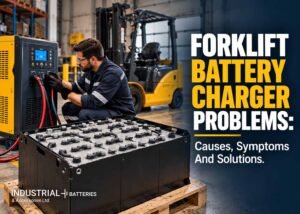
A forklift charger is easy to forget when everything works well. The forklift gets plugged in, the battery charges, and the next shift starts on time. But when the charger starts to fail, the whole operation feels it. A weak charger can slow charging, shorten battery life, create safety risks, and leave equipment sitting when it should be working.
Many charger issues start small. A loose cable, fault light, warm plug, or longer charge time may not seem serious at first. Over time, these signs can turn into bigger forklift battery charger problems. Knowing what to watch for helps you act early and avoid costly downtime.
Why Forklift Charger Health Matters
Your charger does more than send power to the battery. It controls the charging process so the battery gets the right amount of power at the right time. When the charger is not working correctly, the battery may be undercharged, overcharged, or charged unevenly.
This can affect run time, battery life, charging room safety, repair costs, and operator confidence. A charger problem can also look like a battery problem. That is why proper testing matters before replacing either one.
The Charger Takes Too Long To Charge
One of the first signs of industrial battery charger issues is a longer charging cycle. If the same battery now takes much longer to reach full charge, the charger may not be sending power correctly.
This can happen because of worn cables, weak internal parts, poor connections, incorrect settings, or blocked cooling vents. A longer charge time may also mean the charger is reducing output because it is overheating.
Do not ignore this sign. Slow charging can delay shifts and leave batteries only partly charged.
The Battery Does Not Reach Full Charge
If the battery is connected for a full cycle but still does not reach full charge, the charger needs attention. This may show up as short run time, weak lifting power, or a battery indicator that drops faster than usual.
Common causes include wrong charger settings, damaged connectors, failed charger parts, or a mismatch between the charger and battery. A technician can test charger voltage and output to confirm the cause.
This is where forklift charger service is useful. It helps separate a charger issue from a battery issue before money is spent on the wrong repair.
The Charger Will Not Start
A forklift charger not working at all is an obvious warning sign. The unit may show no lights, make no sound, or fail to begin charging after the battery is connected.
Before assuming the charger has failed, check the basics. Make sure power is available at the wall. Check that the emergency stop is not engaged. Make sure the battery connector is seated properly. Also inspect the plug and cable for visible damage.
If the charger still does not start, stop using it until it is checked. The fault may involve a fuse, relay, circuit board, transformer, or internal wiring.
Fault Codes Keep Appearing
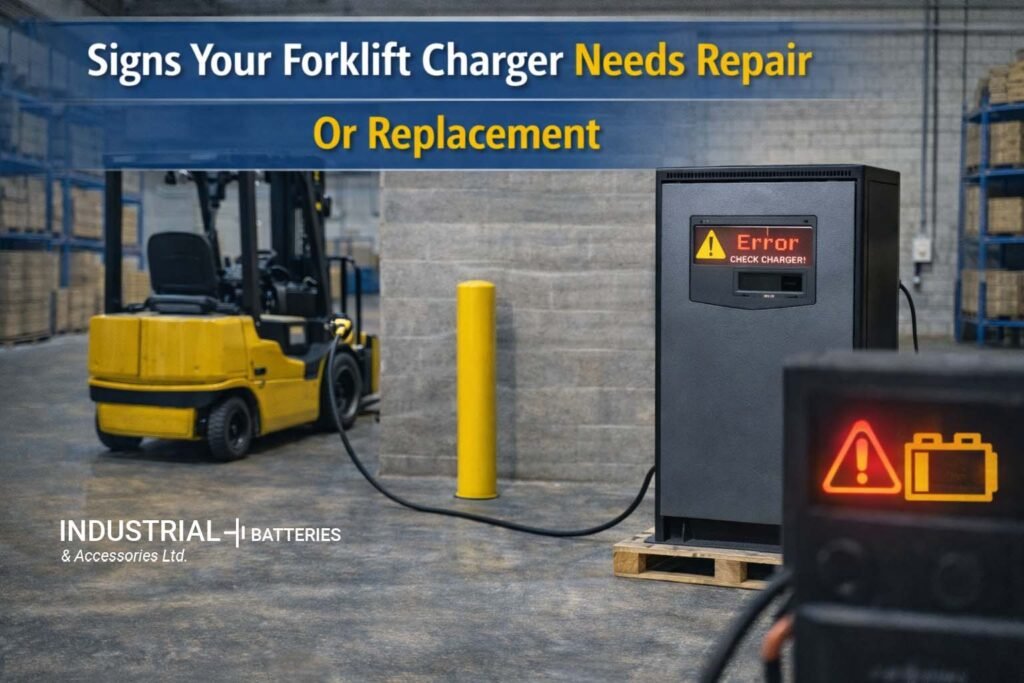
Modern chargers often show fault codes or warning lights. These codes may point to overheating, wrong battery voltage, poor connection, charging interruption, or internal failure.
A single fault code may happen because of a loose plug or temporary power issue. But repeated fault codes should not be cleared and ignored. They are early warnings that the charger is struggling.
Keep a record of the code, the battery used, and when the issue happened. This helps a forklift charger repair company find the cause faster.
Cables, Plugs, Or Connectors Look Damaged
Charger cables and connectors take daily abuse. They get pulled, bent, dragged, and exposed to dust or battery residue. Over time, the cable jacket can crack, contacts can wear down, and plugs can become loose.
Look for burn marks near the plug, melted plastic, loose connector fit, exposed wire, corrosion on contact points, or a plug that feels hot after charging.
Damaged connectors can create heat and poor charging. They can also increase the risk of electrical failure. If a cable or plug looks unsafe, the charger should be removed from service until repaired.
The Charger Gets Too Hot
Some warmth during charging is normal. Excessive heat is not. If the charger cabinet, cable, or connector becomes very hot, there may be an airflow problem, overload issue, wrong setting, or failing internal part.
Blocked vents are a common cause. Chargers need space around them so air can move. Dust, clutter, or poor placement can trap heat inside the unit.
Heat can damage charger parts and battery connections. It can also lead to shutdowns and fault codes. If heat is becoming regular, schedule forklift charger repair before the damage spreads.
You Notice Burning Smells, Smoke, Or Strange Sounds
A burning smell, smoke, buzzing, clicking, or popping sound should be treated seriously. These signs can point to electrical damage inside the charger.
Stop charging right away. Disconnect safely if it can be done without risk. Do not restart the charger just to see if the problem happens again.
These signs need professional inspection. A charger that has shown signs of smoke or burning should not be used until it is confirmed safe.
The Charger Trips Breakers
If the charger trips the breaker often, do not keep resetting it. A breaker trips because something is wrong. The issue may be with the building circuit, charger input, cable, or an internal short.
Repeated breaker trips can damage equipment and create safety concerns. The charger and the power supply should both be checked, especially if the charger worked fine in the same location before.
The Battery Runs Down Faster After Charging
Sometimes the charger appears to complete the cycle, but the forklift loses power too soon. This can happen when the charger is not completing the charge properly or is cutting off too early.
It can also happen when the battery itself is old or weak. That is why both the battery and charger should be tested together. Guessing can lead to unnecessary forklift charger replacement when a repair would have solved the issue.
When Repair Makes Sense
Forklift charger repair is often the right choice when the unit is in good condition and the fault is limited to a repairable part. Common repair areas include cables, connectors, fuses, control boards, cooling fans, displays, and internal wiring.
Repair may make sense when:
- The charger is not very old
- Parts are available
- The cabinet is in good condition
- The repair cost is reasonable
- The charger still matches your battery type
When Replacement Is The Better Option
Forklift charger replacement may be better when the charger is outdated, unsafe, badly damaged, or no longer suitable for your batteries. It may also make sense if repair costs keep rising.
Replacement is worth considering when the charger fails often, parts are hard to find, the charger does not match current battery needs, or downtime is costing more than replacement.
Simple Checks That Help Prevent Charger Problems
Daily habits can prevent many charger issues. Keep the charging area clean. Do not pull the charger cable by the plug. Make sure connectors are fully seated. Keep vents clear. Check for heat, smell, damage, and fault lights.
Also, avoid using the wrong charger for the battery. The charger voltage and battery type must match. A mismatch can reduce battery life and create charging problems.
Keep Your Charging System Reliable
A forklift charger should never be ignored. Slow charging, heat, fault codes, damaged cables, breaker trips, and short battery run time are all signs that something may be wrong. Acting early can protect your battery, forklift, and work schedule.
For safe inspection, forklift charger service, repair guidance, or replacement support, contact Industrial Batteries Accessories Ltd. and get the right help before a small charger issue becomes a major downtime problem.
FAQs
Why Is My Forklift Charger Not Working?
It may be caused by no power supply, a loose connector, a blown fuse, damaged cable, fault code, or internal charger failure.
Can A Bad Charger Damage A Forklift Battery?
Yes. A faulty charger can undercharge, overcharge, or charge unevenly. This can reduce battery life and performance.
How Do I Know If I Need Forklift Charger Repair Or Replacement?
Repair may work for cable, plug, fan, fuse, or board issues. Replacement may be better if the charger is old, unsafe, or fails often.
Why Does My Forklift Charger Get Hot?
Heat may come from blocked vents, dust, overload, poor airflow, damaged parts, or wrong charger settings.
Should I Keep Using A Charger With Fault Codes?
No. Record the code and have it checked, especially if the warning appears more than once.
How Often Should A Forklift Charger Be Serviced?
It should be inspected regularly as part of your battery maintenance plan. Busy operations may need more frequent checks.