Two warehouses buy the same battery on the same day. One replaces it in year three. The other is still running it in year six. The battery did not change. The routine around it did.
Most early battery failures are not bad luck. They come from daily habits like unplugging early, skipping water checks, or running a battery flat. Here is the good news. How to extend forklift battery life is not a mystery, and the fixes cost very little.
This guide from Industrial Batteries Accessories Ltd. covers eight habits that protect your battery, a routine your team can follow, and the point where repair makes more sense than more care.
What Decides How Long a Forklift Battery Lasts?
Three things decide it: how the battery is charged, how deeply it is drained, and how well it is kept clean, watered, and cool. The battery brand matters less than the routine around it.
A lead acid forklift battery stores power in lead plates sitting in a sulfuric acid mix. Every charge and discharge wears the plates a little. A charge cycle is one full run-down and recharge. Most batteries are built for about 1,500 cycles, which is roughly five years of one shift a day.
Good care protects the plates. Heat, flat discharges, and low water attack them. The damage builds slowly, so it is easy to miss until forklift battery life drops off a cliff.
Why Does Knowing How to Extend Forklift Battery Life Pay Off?
Because every extra year is a year you do not buy a new battery, and fewer breakdowns mean fewer stalled shifts. Care costs a few minutes a day. A failed battery stops a truck in the middle of a pick.
Here is what you gain:
- A lower cost per year of ownership
- Steady run time, so no mid-shift swaps
- Fewer emergency service calls
- Fewer acid spills and safer handling
- Records that back up a warranty claim
Price depends on voltage, capacity, and warranty, so ask for a written quote. Industrial Batteries Accessories Ltd. advertises a five year warranty and publishes a warranty book. Most battery warranties expect proper care, so read the terms and keep a log.
What Are the 8 Habits That Extend Forklift Battery Life?
Eight habits do most of the work: charge fully, skip quick top-ups, water after charging, avoid deep discharge, let the battery cool, keep it clean, rotate batteries, and test often. This is how to extend forklift battery life without special tools or training.
1. Charge the Full Cycle Every Time
Let each charge finish. A full charge, usually around eight hours, brings every cell to the same level and mixes the acid evenly.
Unplugging early leaves some cells undercharged. Over time those cells fall behind, and the weakest one drags the whole battery down.
2. Skip the Quick Top-Ups
Short top-ups between breaks, called opportunity charging, add heat and extra cycles. Plugging in for 20 minutes at lunch feels harmless, but it speeds up plate wear.
If your shifts truly need it, ask about equipment built for that use. Do not make it a habit on a standard lead acid battery.
3. Water After Charging, Never Before
Add distilled water after the charge ends. The liquid expands while charging, so watering first can make it overflow and leave acid on the battery.
Cover the plates, and do not overfill. Tap water leaves minerals behind that harm the cells, so use distilled only. Check levels weekly, and more often in summer.
4. Avoid Deep Discharge
Recharge before the battery is nearly empty. Many makers advise stopping at about 20 percent charge left.
Running a battery flat stresses the plates. Train operators to plug in when the gauge says so, not when the truck gives up.
5. Let It Cool After Charging
A battery gets warm while charging. Give it time to rest before use, often about eight hours, though your maker’s guidance rules.
Heat is the hidden enemy of the plates. Most makers warn against letting the liquid climb much above 50°C. Keep the charging area ventilated and away from heaters.
6. Keep the Top Clean and Dry
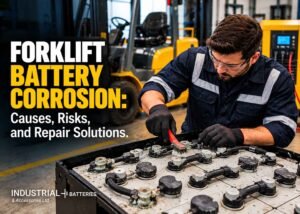
Wipe the top and check the terminals each week. Dirt and acid residue let current leak across the surface and speed up corrosion.
For light buildup, mix baking soda with water to neutralize the acid. Wear gloves and eye protection, keep the vent caps closed, then rinse lightly and dry. White or blue crust on the posts means cleaning is overdue.
7. Rotate Batteries on Multi-Shift Trucks
If a truck runs more than one shift, use a second battery. Each one gets a full charge and a proper rest.
One battery on three shifts never cools and never finishes a clean charge. Label your batteries and swap them on a fixed schedule so wear stays even.
8. Test and Log Readings
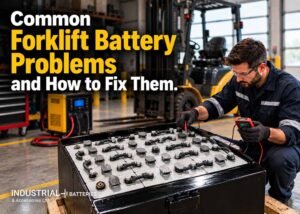
A hydrometer measures the strength of the liquid in each cell. A voltmeter checks the battery as a whole. Test on a schedule and write the numbers down.
One cell reading low while the others look fine is an early warning. Catch it in week one and you have repair options. Catch it after a breakdown and you often do not.
How Does Forklift Battery Care Change With Your Operation?
It changes with shifts, season, and space. Multi-shift sites need spare batteries and fixed swap times, while Ontario’s hot summers and cold winters change how you water and charge.
Small changes extend forklift battery life in any setup:
- One shift a day: One battery works if it gets a full charge and a rest overnight. Water weekly.
- Two or three shifts: Run spares and set swap times. Never let one battery work around the clock.
- Winter docks and cold storage: Cold lowers capacity, so a battery can seem weaker than it is. Charge indoors, away from freezing air.
- Summer heat: Check water more often and keep the charging room ventilated.
- Seasonal trucks: A battery left idle loses charge slowly. Recharge it on a schedule so it does not go flat.
What Does Good Forklift Battery Maintenance Look Like Week to Week?
It looks like a short checklist done on a fixed day, with results written down. Done right, it takes a few minutes per battery.
Strong forklift battery care comes from consistency, so give one person per shift ownership of the list. This is how to maintain forklift batteries in a way that holds up over years:
| Frequency | Task |
| Every shift | Look for leaks, damaged cables, and loose plugs. Charge fully. |
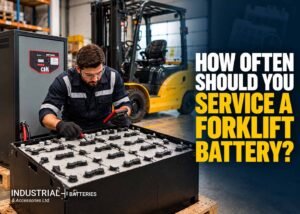
| Weekly | Check water, add distilled water after charging, wipe the top, inspect terminals. |
| Monthly | Record cell readings and compare cells. Check the charger and connectors. |
| Yearly | Book a professional test of the battery and charger. |
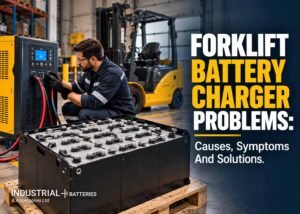
Good forklift battery maintenance includes the charger. A faulty charger can wreck a healthy battery, so check cords, plugs, and any error messages.
Some batteries also need an equalizing charge now and then. It evens out cell strength. Ask your supplier how often yours should get one.
When Is Repair or Replacement Better Than More Care?
When the problem is already inside the battery. Care slows wear, but it cannot undo a cracked case, many weak cells, or a battery at the end of its cycle life.
Here is a simple guide:
- Corroded terminals or worn cables: Repair. See battery service and repairs.
- Over-discharged battery with life left: Battery regeneration can win back lost capacity.
- Several weak cells: A battery pack rebuild is often the better value.
- Cracked case, leaks, or past 1,500 cycles: Replace it with a new forklift battery.
Get a test first. A good technician will tell you when care is enough, and when it is not.
Frequently Asked Questions
How long should a forklift battery last?
About five years, or 1,500 charge cycles, with good care. Heat, flat discharges, and low water can cut that short by years.
Is it bad to charge a forklift battery before it is empty?
Now and then it will not hurt. Doing it every day shortens battery life. Charge when the gauge drops near 20 percent.
Can I use tap water in a forklift battery?
No. Use distilled water only. Tap water leaves minerals behind that damage the plates over time.
How often should I clean a forklift battery?
Wipe the top every week. Clean off corrosion as soon as you see white or blue crust on the posts.
How do I know if my battery needs more than care?
Watch for shorter run time, heat, slow charging, or one cell reading low. Any of these means it is time for a test.
Ready to Get More Years From Your Batteries?
Batteries rarely fail overnight. They wear down one skipped check at a time. Now you know how to extend forklift battery life, and the habits fit into any shift.
Not sure where your batteries stand? Industrial Batteries Accessories Ltd. can test your battery and charger, explain what needs attention, and quote repair, rebuild, or replacement so you can compare. Request a free estimate on the quote page, or reach the team through the contact page.